Potholes remain a relentless challenge for Indian commuters, especially during the monsoon season, frequently causing accidents, vehicle damage, and severe delays. Reportedly, around 2000 Indians die every year due to this systemic failure.
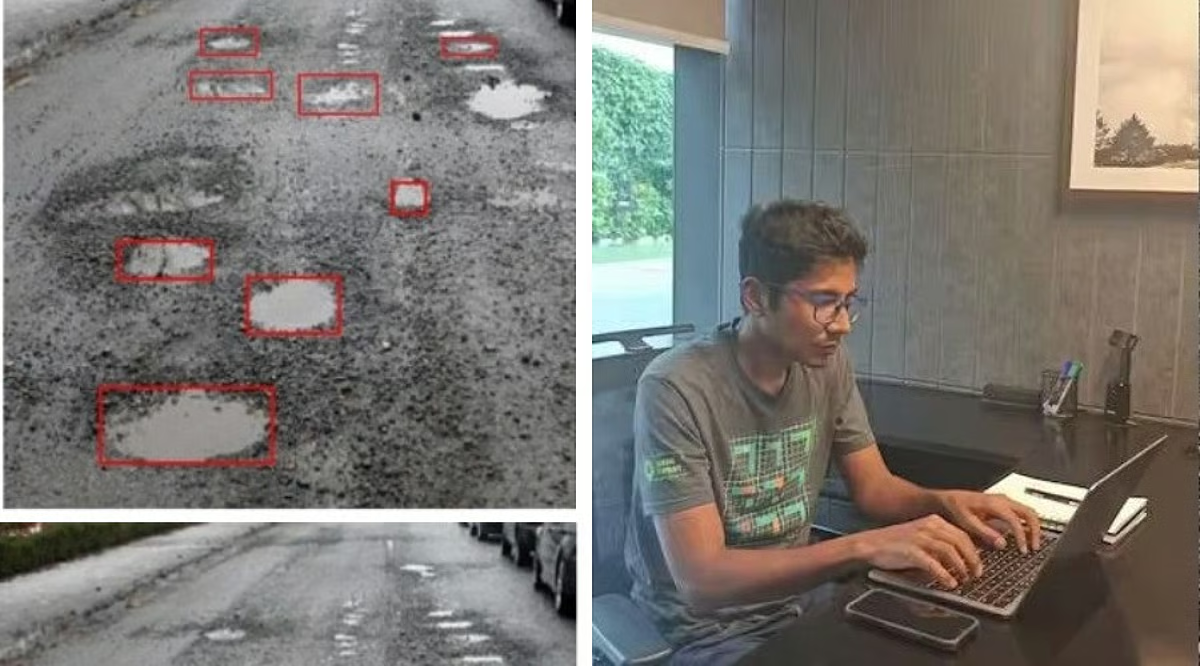
Seeing an opportunity to solve this issue, Bengaluru-based engineer and founder, Gaurav Sen, leveraged AI to create a system that not only spots potholes, but also holds the right people accountable.
In a video shared on Instagram in collaboration with ChatGPT, Sen demonstrated how the system works in real time. Built using an app he developed with OpenAI’s Codex, the system uses a dash-cam, GPS, and an accelerometer fitted in his car. As he drives, the system streams road data to OpenAI’s computer vision models, accurately detecting potholes, and tagging their precise locations.
Most civic tech projects would have stopped at detection, but Sen took this project a step further.
Once a pothole is detected, the system cross-references its location against 2,900 government contracts to identify the specific tender, contractor, and warranty status. If the road is still within its mandatory defect liability period, the contractor is legally required to carry out repairs without charging any extra costs.
The entire workflow, from spotting the pothole to finding the contractor’s details, takes just 4 seconds. However, according to Sen, he needs to send pictures and data in batch for the AI model to process them, making the app not ready for real-time use yet.
Sen’s innovation is a powerful reminder that solving public problems often begins with active civic participation. While technology like AI provides the tools to detect and address these issues, real change starts with a genuine sense of belonging and community engagement. Beyond mere problem detection, Sen’s system brilliantly demonstrates how AI can be harnessed to audit governance, enforce contract terms, and drive public transparency.
muskan singh


